


|
10 People Are Viewing This Product Right Now |
Are Tri-Fuel Generators Worth It? A Complete Buyer’s Guide for Real-World Use
Tri-Fuel Generators – Power outages are like uninvited guests—they never arrive at a convenient time. One minute you’re watching Netflix, the next you’re lighting candles and wondering whether your fridge will survive the night. That’s where generators come in. But not just any generator.
You’ve probably seen the buzz around tri-fuel generators and thought: Are they actually worth it, or just another marketing gimmick? Let’s break it all down—honestly, practically, and without fluff.

Why Fuel Choice Matters More Than Ever
Have you ever been caught in a storm, watching the lights flicker, wondering if your backup power will last? Or maybe you’ve stood in front of rows of generators, baffled by technical jargon about fuels and phases? If you’re feeling overwhelmed by choices between dual-fuel and tri-fuel generators, or confused about what kind of power you really need for your home, you’re not alone.
Choosing the right generator isn’t just about wattage—it’s about fuel flexibility, reliability during emergencies, and finding the sweet spot between cost and convenience. With power outages becoming more frequent across the country, having the right backup power system is no longer a luxury but a necessity for many households.
In this comprehensive guide, we’ll untangle the complex world of generator fuels, break down technical concepts into plain English, and help you answer the million-dollar question: Are tri-fuel generators worth the investment for your specific needs?
Understanding Your Fuel Options: Gasoline, Propane, and Natural Gas
Before we dive into generator types, let’s understand the three main fuels you’ll encounter in your search.
- Gasoline is what most people think of first—it’s readily available, provides quick startup, and works well in portable applications. But it has significant drawbacks: it degrades within months, requires fuel stabilizers for storage, and presents greater fire hazards. During widespread emergencies, gas stations may be closed or have long lines, making this “convenient” fuel suddenly inconvenient.
- Propane (LPG) offers distinct advantages. It has an exceptionally long shelf life—lasting for years without degrading —and burns cleaner than gasoline, producing fewer emissions and reducing carbon buildup in your engine. This translates to less maintenance over time. Propane tanks are also widely available at hardware stores, gas stations, and home centers.
- Natural Gas represents the ultimate in convenience for stationary home backup. If your home is connected to a natural gas line, you essentially have an unlimited fuel supply that doesn’t require manual refilling. Natural gas lines typically remain operational even during storms when other fuel sources become scarce. It’s also generally more affordable per BTU than gasoline or propane.


Dual-Fuel vs. Tri-Fuel Generators: The Core Differences
1. What Exactly is a Dual-Fuel Generator?
A dual-fuel generator operates on two distinct fuel sources, typically gasoline and propane. This versatility enhances adaptability—if one fuel becomes scarce, you can switch to the other. These generators contain a switching mechanism that allows transition between fuels, either manually or automatically .
2. What is a Tri-Fuel Generator?
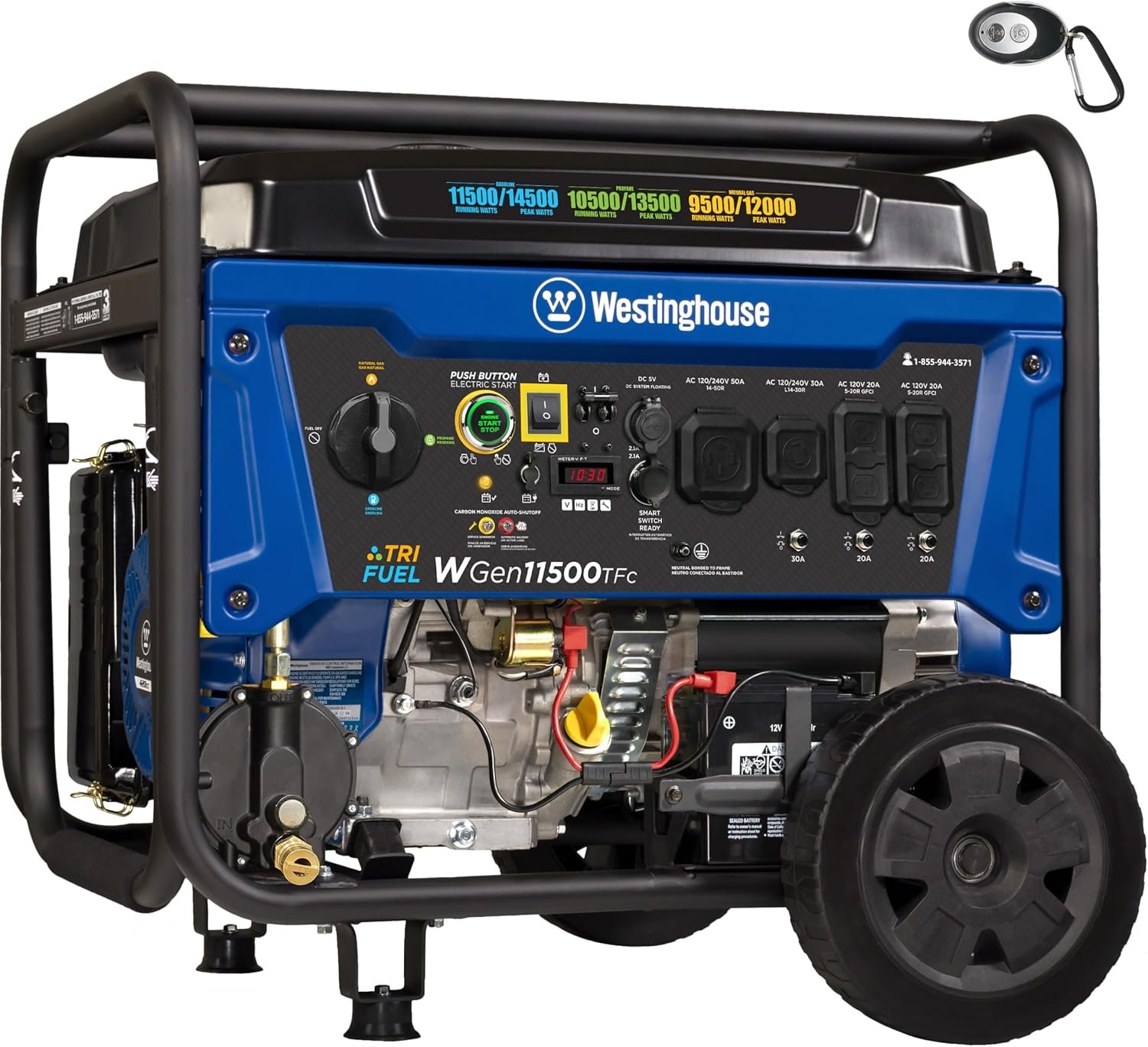
A tri-fuel generator adds natural gas capability to the dual-fuel equation. This triple flexibility means you can use gasoline for immediate needs, propane for stored fuel, and natural gas for continuous home backup. Some models come tri-fuel ready, while others can be converted using kits.
3. Side-by-Side Comparison
| Feature | Dual-Fuel Generator | Tri-Fuel Generator |
|---|---|---|
| Fuel Options | Gasoline & Propane | Gasoline, Propane & Natural Gas |
| Best For | Portable use, areas without natural gas | Home backup with natural gas hookup |
| Convenience | Good flexibility with two fuels | Maximum flexibility with three fuels |
| Typical Cost | Lower initial investment | Higher upfront cost |
| Complexity | Easier to operate and maintain | More complex operation and maintenance |
| Run Time Potential | Extended with two fuel sources | Potentially unlimited with a natural gas line |
4. What Fuels Does a Tri-Fuel Generator Use?
| Gasoline | Propane | Natural Gas |
|---|---|---|
| Highest power output | Cleaner burning | Unlimited supply (via utility line) |
| Easy to find | Long shelf life | No refueling |
| Short shelf life | Lower wattage output | Lowest energy density |
5. Should You Get a Dual-Fuel or Tri-Fuel Generator?
Ask yourself one question: What happens if gasoline is unavailable? If your answer makes you uncomfortable, go tri-fuel.
| Feature | Dual-Fuel | Tri-Fuel |
|---|---|---|
| Gasoline | ✅ | ✅ |
| Propane | ✅ | ✅ |
| Natural Gas | ❌ | ✅ |
| Flexibility | Medium | High |
| Cost | Lower | Higher |
The Pros and Cons: Making an Informed Choice
1. Advantages of Dual and Tri-Fuel Generators
- Fuel Flexibility is King: The primary advantage of both systems is the ability to choose based on availability and circumstance. When hurricanes knock out power for days, gasoline often becomes scarce, but you might still find propane available. With a tri-fuel unit connected to natural gas, you’re essentially “storm-proof” as these lines rarely fail.
- Extended Run Time: The ability to switch between fuels results in significantly longer operational periods. When your gasoline runs low, you don’t have to shut down—just switch to your propane reserve or natural gas line.
- Environmental Considerations: Propane and natural gas burn cleaner than gasoline, producing fewer emissions. This isn’t just better for the environment—it also means less carbon buildup in your engine, potentially extending its lifespan.
- Seasonal Optimization: Different fuels perform better under different conditions. Propane works more efficiently in hotter weather, while gasoline excels in freezing temperatures. With multiple fuel options, you can optimize performance year-round.
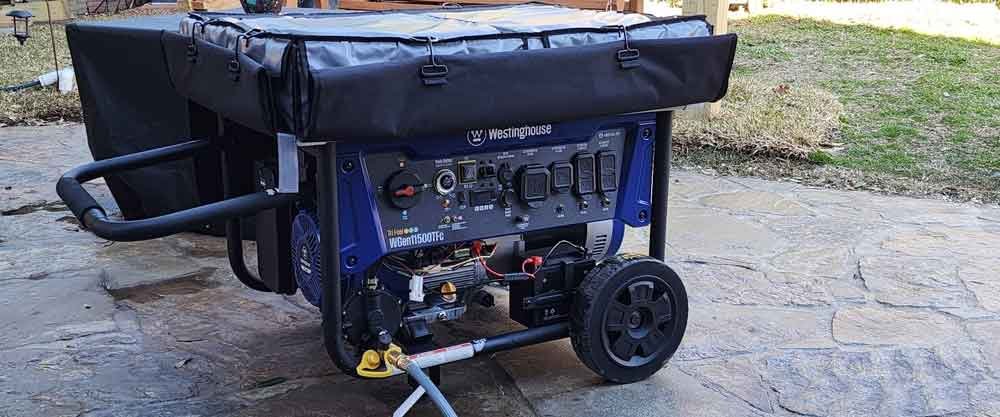
2. The Disadvantages: What Manufacturers Don’t Always Highlight
- Higher Initial Investment: Dual and tri-fuel generators typically come with a higher price tag than their single-fuel counterparts. The added technology and components for fuel switching aren’t cheap.
- Increased Complexity: More fuel options mean more systems to understand and maintain. You’ll need to know how to properly switch between fuels and maintain the generator for each fuel type. Some users prefer the simplicity of a single-fuel unit.
- Storage Challenges: Storing multiple fuel types safely requires planning and space. Gasoline needs proper containers and has quantity restrictions in many areas (often limited to 25 gallons in residential settings). Propane tanks require outdoor, well-ventilated storage away from heat sources.
- Potential Power Reduction: Some generators produce slightly less power when running on propane or natural gas compared to gasoline. Always check your generator’s specifications for power output by fuel type.
Calculating Your Run Time: How Long Will Your Fuel Last?
One of the most practical questions generator owners ask is: “How long will this run before I need to refuel?” Let’s break this down with actual calculations.
1. The 20lb Propane Tank Standard
A standard 20lb propane tank (like those used for grills) contains approximately 4.6 gallons of propane when full. How long this lasts depends entirely on your generator’s load:
- A 5,000-watt generator running at half capacity uses about 0.75 gallons per hour
- At this rate, a 20lb tank would provide roughly 6 hours of power
- For a larger 20,000-watt generator at full load, consumption jumps to 3-5 gallons per hour, reducing run time to about 1-1.5 hours per tank.
2. Run Time Calculation Formula
You can estimate your generator’s propane consumption with this formula :
- Calculate Horsepower: (Watts / 1000) × 2
- Determine BTU Requirement: Horsepower × 10,000
- Calculate Gallons Per Hour: BTU / 92,000 (BTU value of propane)
For example, a 4,000-watt load requires 8 horsepower, needs 80,000 BTU/hour, and consumes approximately 0.87 gallons of propane per hour.
| Generator Size | Runtime |
|---|---|
| 3,000–4,000W | 8–10 hrs |
| 5,000–7,000W | 5–7 hrs |
| 8,000+W | 3–5 hrs |
3. Maximizing Your Run Time
To extend your generator’s operation:
- Run at lower loads whenever possible – 50% load vs. 100% load can nearly double run time
- Practice load management – power only essential appliances
- Maintain your generator – a well-tuned engine uses fuel more efficiently
- Consider larger propane tanks – a 500-gallon tank can provide over a week of continuous power for a moderate-sized home
Single-Phase vs. Three-Phase Power: What Homeowners Need to Know
When researching generators, you’ll encounter terms like “single-phase” and “three-phase” power. Most residential applications use single-phase power, which is what comes from your standard household outlets.
1. Three-Phase Generator Disadvantages for Homes
While three-phase generators are essential for industrial applications with heavy machinery, they present several disadvantages for typical residential use:
- Compatibility Issues: Most homes aren’t wired for three-phase power, requiring expensive electrical modifications
- Higher Cost: Three-phase generators typically cost more than comparable single-phase models
- Complexity: They’re generally more complicated to install and maintain
- Overkill for Residential Needs: The balanced load distribution advantage of three-phase power doesn’t typically benefit home applications
2. Can You Use a Three-Phase Generator for Single-Phase?
Some three-phase generators can be reconfigured for single-phase use, but this often results in reduced power output—sometimes by as much as one-third. Unless you have specific three-phase equipment or plans for a workshop with industrial tools, a single-phase generator is almost always the better choice for residential backup power.
The 20-20-20 Rule and Essential Generator Safety
1. What is the 20-20-20 Rule?
This easy-to-remember safety guideline could save lives:
- 20 feet: Always place your generator at least 20 feet from your home
- 20 seconds: The time it takes for deadly carbon monoxide to reach dangerous levels in enclosed spaces
- 20 minutes: How often you should check on your generator during extended use
2. Critical Safety Practices Every Owner Must Follow
- Carbon Monoxide Kills: Never operate a generator in enclosed spaces, including garages, even with doors open. Carbon monoxide is colorless, odorless, and deadly—it can travel far from the generator and seep into your home.
- Proper Placement: Keep generators away from windows, doors, and vents. Position the exhaust facing away from your home and any neighboring structures.
- Grounding Requirements: Most portable generators don’t require grounding if you’re plugging appliances directly into them. However, if you’re connecting to a transfer switch or your home’s electrical system, you’ll likely need a grounding rod at least 8 feet long driven into the earth.
- Clearance Codes: Check local regulations, but generally maintain at least 5 feet of clearance on all sides and above the generator for proper ventilation. Never place under decks or in brushy areas.
Where NOT to Place Your Generator:
- Inside any structure (home, garage, shed, basement)
- Under open windows or near air intake vents
- In wet conditions without proper weather protection
- On unstable surfaces that might cause tipping
Are Diesel Generators Being Phased Out?
You might have heard rumors about diesel generators disappearing. While it’s true that diesel faces increasing regulations, particularly in commercial applications, they’re not vanishing entirely.
In California and other environmentally progressive states, data centers (which consume massive amounts of power) are being encouraged to transition away from diesel backup generators to cleaner options like battery storage or fuel cells. These facilities often run their diesel generators regularly for testing, creating significant localized pollution.
For residential use, diesel generators still have their place—they’re incredibly durable and efficient for continuous heavy loads. However, they face competition from dual-fuel and tri-fuel options that offer cleaner operation and more fuel flexibility. The trend is toward hybrid systems that combine traditional generators with battery storage for optimal efficiency.
Choosing the Most Reliable Generator Brand
Reliability in generators comes down to more than just brand names—it’s about proper maintenance, correct sizing, and quality installation. However, some brands consistently earn praise from both consumers and industry experts:
Consumer Reports now only recommends portable generators with automatic carbon monoxide shutoff technology, a feature pioneered by several leading brands. Look for certifications like ANSI/UL2201 or ANSI/PGMA G300 for verified safety performance.
When evaluating brands, consider:
- Warranty length and coverage (some offer up to 5-year warranties)
- Availability of service centers and qualified technicians
- Parts availability—can you get common replacement parts locally?
- User reviews focusing on long-term reliability, not just initial impressions
1. What Is the Most Reliable Brand of Generator?
Reliability isn’t just brand—it’s design, support, and engine quality.
Top Trusted Brands
| Model | Running Watts | Fuel Types | Best For |
|---|---|---|---|
| Champion 9000W Tri-Fuel | 7,500 | Gas / Propane / NG | Whole-home backup |
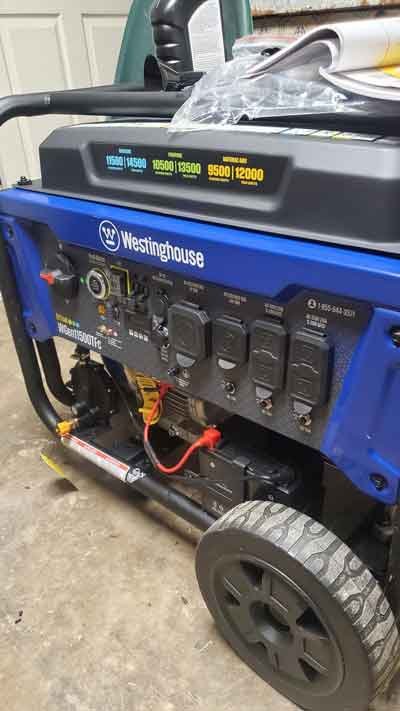
| Westinghouse WGen9500TFc | 7,500 | Gas / Propane / NG | Transfer switch setups |
| Firman T07573 | 6,900 | Gas / Propane / NG | Budget-friendly power |
| Pulsar G12KBN | 9,500 | Gas / Propane / NG | High-load appliances |
👉 Check current pricing and availability before outages spike.
The Verdict: Are Tri-Fuel Generators Worth It?
After examining all the factors, here’s my straightforward assessment:
Tri-fuel generators are absolutely worth it IF:
- Your home has natural gas service available
- You experience frequent or prolonged power outages
- You want the ultimate in fuel flexibility and preparedness
- Your budget allows for the higher initial investment
- You’re comfortable with the additional complexity of multiple fuel systems
Dual-fuel generators represent a better value IF:
- You don’t have natural gas service at your location
- You need good flexibility without the highest cost
- You primarily want a cleaner propane operation with gasoline as backup
- You prefer somewhat simpler operation and maintenance
Single-fuel generators might suffice IF:
- You experience rare, short-duration outages
- You have reliable access to your chosen fuel type
- Budget constraints are your primary consideration
- You prioritize simplicity above all else

Future Trends in Generator Technology
The generator market isn’t static. Several emerging trends will shape your choices in the coming years:
- Hybridization: Expect more systems that combine traditional generators with battery storage. These systems use the generator to charge batteries, then run quietly on battery power until recharge is needed, significantly reducing fuel consumption and noise.
- Smart Integration: Future generators will increasingly integrate with home automation systems, allowing remote monitoring, automated load management, and predictive maintenance alerts.
- Enhanced Efficiency: Ongoing improvements in engine design and electronic fuel injection will continue to boost fuel efficiency across all generator types.
- Quieter Operation: Noise reduction remains a priority, with advanced mufflers and enclosure designs making generators more neighborhood-friendly.
Conclusion: Power on Your Terms
Choosing between dual-fuel and tri-fuel generators ultimately comes down to your specific needs, budget, and desired level of preparedness. While tri-fuel generators offer the maximum fuel flexibility—especially valuable during extended emergencies—dual-fuel units provide substantial versatility at a lower cost.
Remember that the “best” generator isn’t necessarily the most powerful or expensive one—it’s the one that reliably meets your needs when the lights go out. Consider your local fuel availability, typical outage patterns, and which appliances you truly need to power.
Proper sizing, installation, and maintenance matter just as much as your choice between fuel options. A perfectly sized dual-fuel generator that’s well-maintained will outperform an oversized, neglected tri-fuel unit every time.
Whichever path you choose, the peace of mind that comes with reliable backup power is invaluable. In an increasingly uncertain climate with more frequent extreme weather events, that peace of mind might just be the best investment you make for your home and family.
Frequently Asked Questions
- How does fuel choice affect generator maintenance?
Propane and natural gas burn cleaner than gasoline, producing less carbon buildup in your engine. This typically means less frequent maintenance when using these fuels. However, dual and tri-fuel generators have more complex fuel systems that may require specialized knowledge to maintain. - Can I convert my existing gasoline generator to dual or tri-fuel?
Many gasoline generators can be converted using aftermarket kits, but you should always check with the manufacturer first. Conversion typically involves installing a new carburetor or fuel mixer and proper fuel lines. Professional installation is recommended to ensure safety and proper operation. - What’s the real cost difference between operating on gasoline vs. propane vs. natural gas?
While prices vary regionally, natural gas is typically the most economical per BTU, followed by propane, with gasoline usually being the most expensive. However, you must factor in equipment costs—natural gas requires a fixed hookup, while propane needs tank storage. - How do I properly store fuels for emergency generator use?
Gasoline should be stored in approved containers with stabilizer added, typically for no more than 6-12 months. Propane can be stored for years in properly maintained tanks kept outdoors. Never store fuels indoors or near ignition sources, and always follow local fire codes for quantity limits. - Are there any tax incentives or rebates for choosing cleaner-fuel generators?
Some states and municipalities offer incentives for propane or natural gas generators due to their cleaner emissions. Check with your local energy provider and state energy office. Additionally, some areas offer property tax exemptions for permanent standby generators. - Can You Run a House on a Three-Phase Generator?
Yes—but most homes don’t need it.
Unless you’re running industrial equipment, single-phase is simpler and cheaper. - Can a Three-Phase Generator Be Used for Single-Phase?
Yes. Many three-phase generators allow tapping one phase, but efficiency drops. - Is Three-Phase Cheaper to Run Than Single-Phase?
For industrial loads—yes.
For homes—no. - How Far Away Does a Generator Need to Be From the House?
At least 20 feet, according to CDC and safety standards. - How Far Does Carbon Monoxide Travel From a Generator?
CO can travel over 30 feet, especially with the wind. That’s why distance matters. - Are tri-fuel generators safe for home use?
Yes, when installed and used according to safety guidelines, including proper ventilation and distance. - Do tri-fuel generators produce less power on propane?
Yes, propane and natural gas typically produce 10–15% less wattage than gasoline. - Can a tri-fuel generator run a whole house?
Yes, with sufficient wattage and a transfer switch. - Is propane better than gasoline for generators?
Propane burns cleaner and stores longer, but gasoline provides more power. - Are tri-fuel generators louder than regular generators?
No. Noise levels depend on engine design, not fuel type.
| Tri-Fuel Generator Near You | |
|---|---|
 |
 |
| Check Amazon Discount | Check Walmart Discount |
You Might Also Like: