


|
10 People Are Viewing This Product Right Now |
Power Station Lifespan Unplugged: How Long Pecron Stations Last & Are They Worth It?”
Portable power stations have become the modern safety net. Whether it’s a blackout, camping trip, RV adventure, or rising electricity costs, people want reliable backup power without the noise and fumes of gas generators.
Pecron Power Station Lifespan – Let’s tackle the big question head-on: How long does a Pecron power station last? The straight answer is that Pecron’s LiFePO4 models are rated for over 3,500 charge cycles before reaching 80% of their original capacity. In practical terms, that translates to approximately 10 years of daily use if you’re charging and discharging it once per day.
But there’s so much more to understand about what affects that lifespan, how to maximize it, and whether these portable power solutions truly deliver on their promises.
Think of a portable power station as a super-powered battery bank on steroids – it stores electrical energy that you can use anywhere, anytime. Unlike traditional gas generators that roar to life with fumes and noise, these modern power stations offer silent, clean energy that’s safe for indoor use.
But they come with their own considerations regarding cost, capacity, and longevity. In this comprehensive guide, we’ll explore everything from the technical specifics of Pecron models to the practical realities of owning portable power.
Understanding Portable Power Station Lifespan Fundamentals
1. What Determines How Long Your Power Station Will Last?
The lifespan of any portable power station primarily revolves around its battery technology and how you use it. Just like your smartphone battery gradually holds less charge over time, power station batteries degrade with each charge cycle. But not all batteries degrade at the same rate – that’s where technology makes a crucial difference.
Two key metrics define power station longevity:
- Cycle Life: This refers to the number of complete charge-discharge cycles a battery can undergo before its capacity drops to a specified percentage (usually 80% of its original capacity). A “cycle” means using 100% of the battery’s capacity, though not necessarily all at once – using 50% one day and 50% the next still counts as one complete cycle.
- Calendar Life: Regardless of how many cycles you put it through, batteries naturally degrade over time due to chemical aging processes. Quality batteries with proper storage can maintain significant capacity for 5-10 years.
LiFePO4 (Lithium Iron Phosphate) batteries, which Pecron uses in their premium models, represent the current gold standard for portable power stations. Compared to older lithium-ion or lead-acid batteries, LiFePO4 offers superior thermal stability, longer cycle life, and enhanced safety. While a typical lithium-ion battery might offer 500-1000 cycles, Pecron’s LiFePO4 batteries deliver over 3,500 cycles.
| Battery Type | Average Cycles | Expected Lifespan |
|---|---|---|
| Lithium-ion (NMC) | 500–1,000 | 3–5 years |
| LiFePO₄ (LFP) | 3,000–6,000 | 8–15 years |
| Lead-acid | 300–500 | 2–3 years |


2. The Critical Factors That Impact Longevity
Beyond battery chemistry, several usage factors significantly influence how long your power station will serve you:
- Depth of Discharge: Frequently draining your battery to near 0% stresses it more than partial discharges. Many experts recommend avoiding going below 20% for regular use.
- Charging Speed: While fast charging is convenient, slower charging typically generates less heat and reduces battery stress over time.
- Temperature Exposure: Extreme heat accelerates battery degradation, while extreme cold temporarily reduces performance. Pecron addresses this with models featuring automatic battery heating for reliable operation down to -4°F (-20°C).
- Storage Conditions: When not in use for extended periods, manufacturers typically recommend storing at around 50% charge in a cool, dry place.
Pecron Power Station Lifespan: Specific Lifespan and Performance Details
1. The Pecron E3600LFP: A Closer Look at Capabilities
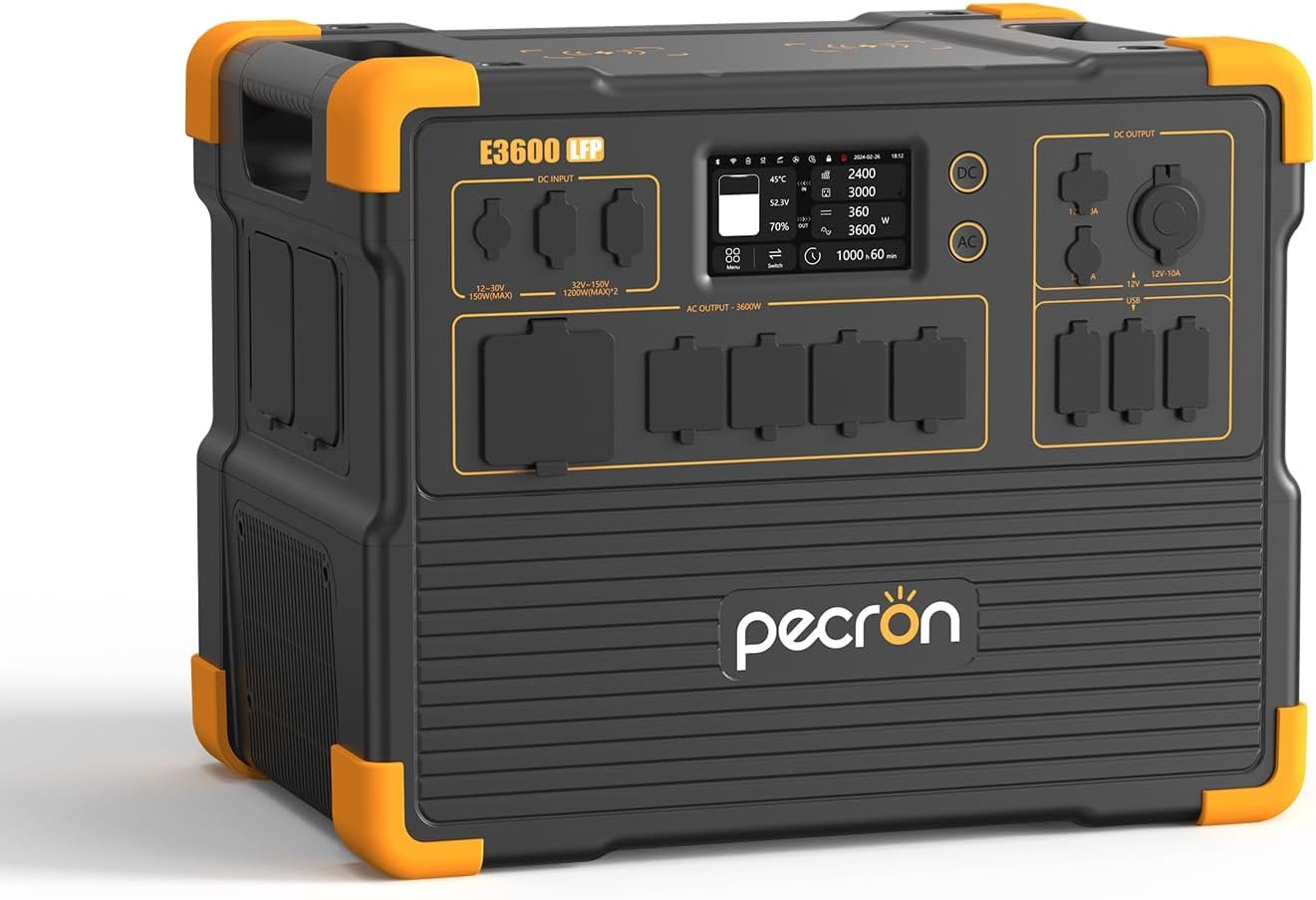
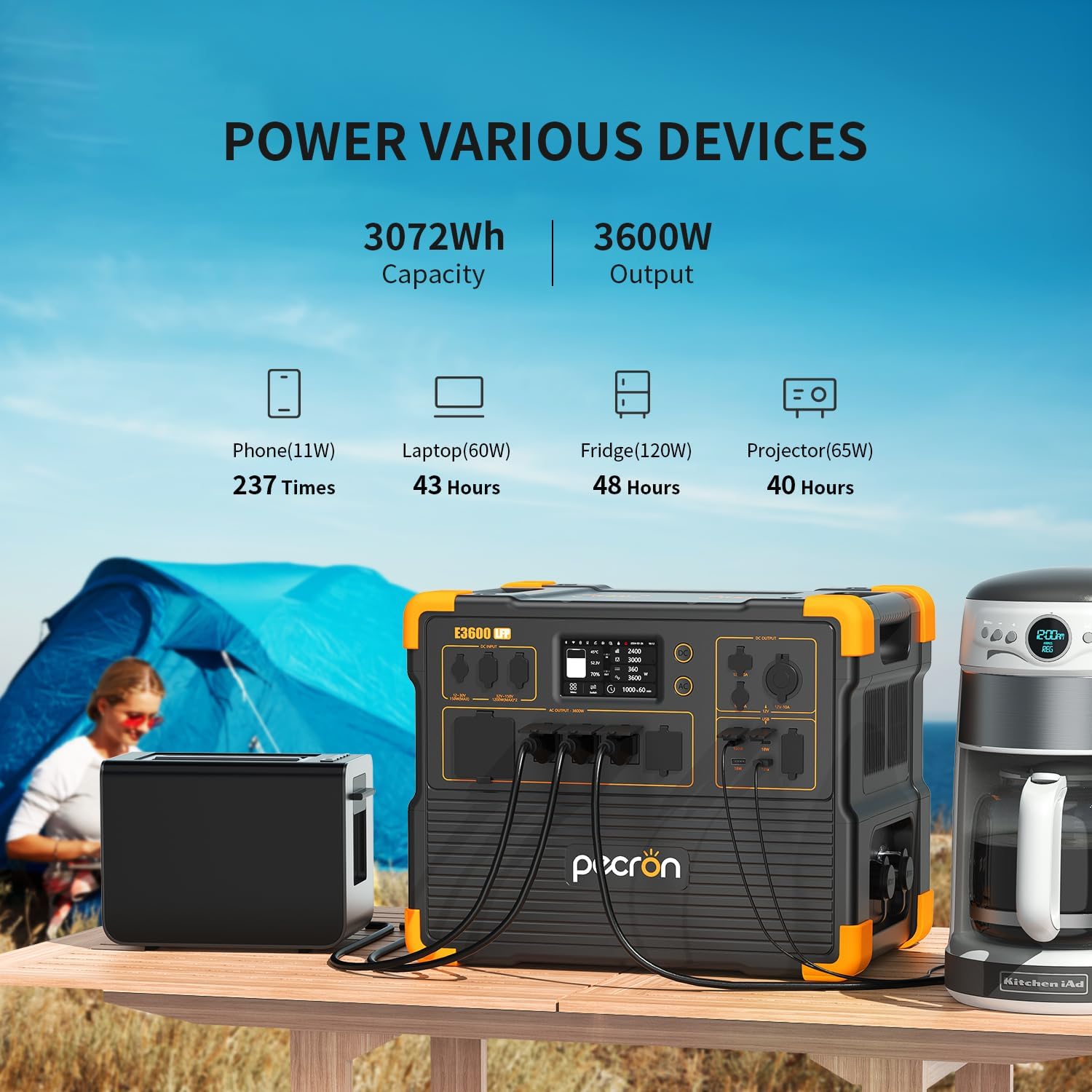
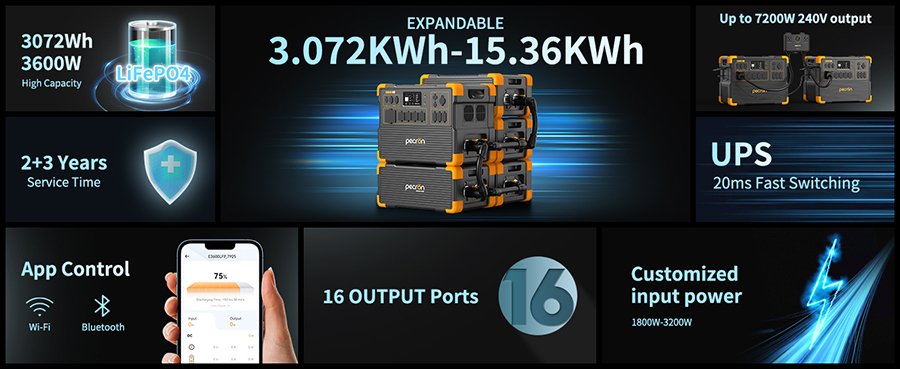
The Pecron E3600LFP represents the higher end of Pecron’s portable power lineup, and its specifications help illustrate what modern portable power stations can achieve. With a 3072Wh capacity and 3600W pure sine wave output (surge to 7000W), this unit can power substantial appliances, including full-size refrigerators, power tools, and even some air conditioners.
But what about its lifespan? The E3600LFP utilizes LiFePO4 battery technology rated for 3,500+ cycles to 80% capacity. Let’s put that into perspective: If you used this power station once per week, that’s nearly 70 years of service. Even with daily use, you’re looking at approximately 10 years before noticeable capacity reduction. This exceptional longevity is one of the key advantages of investing in quality LiFePO4-based power stations.
2. What About Other Pecron Models?
Pecron maintains consistent battery technology across its premium lineup:
- Pecron E2400LFP: Features 2048Wh usable energy with over 3,500 cycle LiFePO4 battery life
- Pecron E1500LFP: Offers 1536Wh capacity with identical long-life battery chemistry
- Pecron E1000LFP: 1024Wh capacity with automatic battery heating for cold-weather reliability
- Pecron E2000LFP 1920Wh Power Station
This consistency means you can choose the capacity that fits your needs without compromising on long-term durability. Whether you need a compact unit for weekend camping or a robust system for home backup, Pecron’s LiFePO4 technology delivers similar lifespan expectations across models.
The Advantages vs. Disadvantages of Portable Power Stations
1. Why People Love Their Portable Power Stations
Portable power stations have surged in popularity for compelling reasons:
- Silent, Fume-Free Operation: Unlike traditional gas generators that produce noise pollution and dangerous carbon monoxide, power stations operate virtually silently with zero emissions. This makes them safe for indoor use during power outages – a critical advantage when you need to power medical devices like CPAP machines overnight.
- Versatility and Ease of Use: Modern power stations are essentially plug-and-play solutions. With multiple output ports (AC, USB-C, USB-A, 12V DC), they can simultaneously power everything from smartphones and laptops to mini-fridges and LED lights. Many models, including Pecron’s, offer mobile app control for monitoring and management from your smartphone.
- Renewable Energy Compatibility: Most quality power stations seamlessly integrate with solar panels, allowing you to harness free solar energy for recharging. This creates a sustainable power cycle perfect for camping, RV living, or reducing grid dependence during emergencies.
- Low Maintenance: Compared to gas generators that require regular oil changes, fuel stabilization, and engine maintenance, power stations need minimal upkeep – primarily proper charging and storage practices.
2. The Real Limitations You Should Consider
Despite their advantages, portable power stations aren’t perfect for every situation:
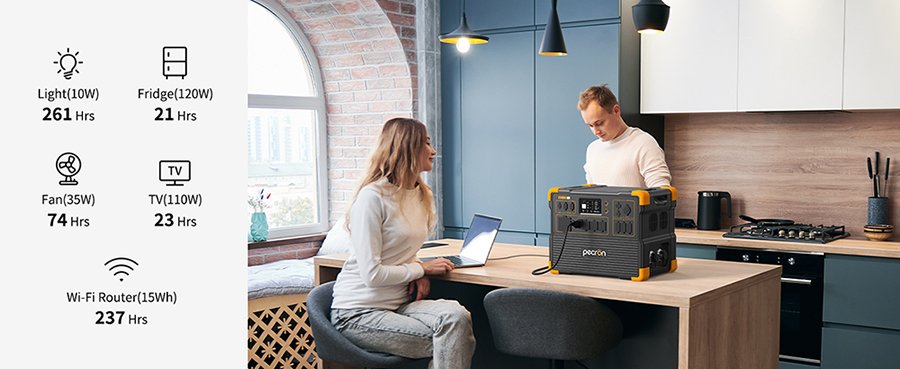
- Capacity Constraints: Even the largest portable power stations have limits. While a Pecron E3600LFP at 3072Wh can power a refrigerator for 10-20 hours (depending on the model and cycling), it won’t run a central air conditioner or electric heating system for extended periods. They’re ideal for essential devices and short-term outages, but not whole-house power during prolonged blackouts.
- Recharge Time Considerations: While Pecron’s fast-charging technology can refill the E3600LFP in as little as 1.3 hours using a 30A connection, standard wall charging typically takes 4-8 hours for most models. Solar charging extends this timeframe significantly, especially considering the 33% rule discussed earlier.
- Initial Investment Cost: Quality portable power stations represent a significant upfront investment. The Pecron E3600LFP, for example, represents a considerable purchase, though it’s competitive with similar-capacity models from other premium brands. You’re paying for advanced battery technology, pure sine wave inverters, and robust construction.
- Weight and Portability Trade-offs: There’s an inherent tension between capacity and portability. The Pecron E3600LFP weighs 79 pounds (36kg) – technically portable with its built-in handles, but not something you’d want to carry far. Smaller models sacrifice capacity for easier transport.
- Temperature Sensitivity: While LiFePO4 batteries handle temperature extremes better than other chemistries, all batteries suffer reduced performance in extreme cold. Pecron addresses this in some models with automatic heating systems that activate below 41°F (5°C).
| Advantages | Disadvantages |
|---|---|
| Silent, fume-free operation | Limited capacity for large appliances |
| Safe for indoor use | Long recharge times (especially solar) |
| Low maintenance | High initial investment |
| Solar compatible | Heavy at higher capacities |
| Multiple device charging | Battery degradation over time |
| Instant power during outages | Limited high-power tool capability |
Are Portable Power Stations Worth the Investment?
1. Evaluating Your Specific Needs
The value of a portable power station depends entirely on your intended use cases. Let’s break down different scenarios:
- For Emergency Home Backup: If you experience frequent or prolonged power outages, a quality power station like the Pecron E3600LFP can keep essential devices running – refrigerators (to prevent food spoilage), medical equipment, communication devices, and lighting. Compared to gas generators, they offer indoor-safe operation with no fumes or carbon monoxide risk. The investment becomes more justifiable as power outages increase in frequency and duration.
- For Camping and Outdoor Adventures: Portable power stations transform outdoor experiences. They enable you to power portable fridges, recharge camera equipment, run LED lighting, and even power small appliances. For frequent campers or RV travelers, eliminating generator noise and fumes enhances the outdoor experience significantly.
- For DIY and Remote Work: Contractors, photographers, and remote workers benefit from silent, portable power at job sites or outdoor locations. The ability to power tools, laptops, and lighting without access to grid power provides professional flexibility.
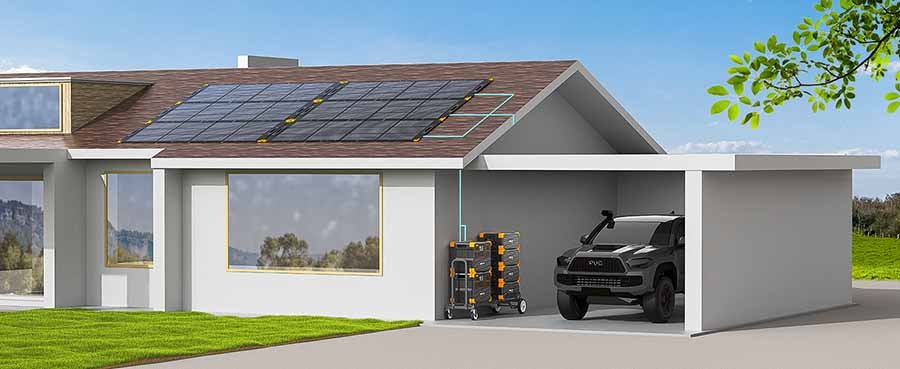
- As a Solar Energy Component: For those investing in solar panels, a portable power station serves as a modular energy storage solution. You can charge it with solar panels during the day and use the stored energy at night, creating a personal microgrid.
2. Cost Analysis: Upfront vs. Long-Term Value
Let’s address the financial considerations honestly:
- Initial Cost: Quality portable power stations require significant upfront investment. The Pecron E3600LFP, for example, represents a substantial purchase, though it’s competitive with similar-capacity models from brands like EcoFlow or Jackery.
- Long-Term Savings: Where you potentially save:
- No fuel costs (unlike gas generators)
- Minimal maintenance expenses
- Potential to reduce food spoilage losses during outages
- Possibly lower insurance claims from sump pump failures during storms
- Durability Factor: With 3,500+ charge cycles, a Pecron power station could theoretically last a decade with regular use. Spread the cost over 10 years, and the annual expense becomes more reasonable, especially if it prevents significant losses during outages.
- Alternative Comparisons: Compared to installing a whole-house natural gas generator (which can cost $8,000-$15,000), portable power stations offer targeted backup at a fraction of the price. They’re not equivalent solutions – whole-house generators automatically power your entire home – but for essential circuit backup, power stations provide substantial value.
3. Making the Decision: Key Questions to Ask Yourself
Before investing in any portable power station, consider these questions:
- What specific devices do I need to power during an outage, and for how long? Calculate total wattage requirements and desired runtime.
- How frequently do I experience power interruptions? More frequent outages increase the value proposition.
- Will I use it for portable applications (camping, RV, work sites) or strictly home backup? Portability needs affect which capacity/size trade-off makes sense.
- What’s my budget, including potential solar panel expansion? Consider not just the unit cost but the necessary accessories.
- How important is silent operation and indoor safety? If you have indoor air quality concerns or noise restrictions, power stations have clear advantages over generators.
Conclusion: Powering Your Decisions with the Right Knowledge
Pecron Power Station Lifespan – Portable power stations like those from Pecron represent a remarkable convergence of battery technology, renewable energy integration, and practical design. With lifespans extending to 3,500+ charge cycles – roughly a decade of regular use – and the ability to power essential devices during outages or off-grid adventures, they offer compelling value for the right users.
The key is matching the technology to your specific needs. For frequent campers, outdoor professionals, or homeowners in areas with unreliable power, a quality power station delivers peace of mind and practical utility that often justifies the investment. For those with minimal backup power needs or tight budgets, smaller units or alternative solutions might make more sense.
As battery technology continues advancing and renewable energy becomes increasingly accessible, portable power stations will likely play an expanding role in how we access electricity. Brands like Pecron, with their focus on LiFePO4 technology and robust engineering, position themselves well in this evolving market. By understanding the real capabilities, limitations, and lifespan factors of these devices, you can make an informed decision that keeps your essential devices powered whenever and wherever you need them.
FAQs About Pecron Power Station Lifespan
- How long can a Pecron E3600 power a standard refrigerator?
A standard refrigerator typically draws 100-250W when running (though starting surges are higher). With its 3072Wh capacity, the Pecron E3600LFP could power a 150W refrigerator for approximately 20 hours continuously, or several days if the fridge cycles on and off (as they normally do). Remember that actual runtime depends on the refrigerator’s efficiency, ambient temperature, and how often the door is opened. - Can I leave my Pecron power station plugged in all the time for home backup?
Yes, most modern power stations, including the Pecron model,s support pass-through charging, meaning they can be left plugged into AC power while simultaneously powering devices. The unit will automatically switch to battery power during an outage. However, for optimal battery health during long-term storage, manufacturers often recommend storing at around 50% charge rather than keeping fully charged continuously. - What happens to my portable power station’s lifespan if I rarely use it?
Even with minimal use, batteries naturally degrade over time due to chemical aging processes. Quality LiFePO4 batteries like those in Pecron stations typically retain 70-80% of their capacity after 5-10 years regardless of cycle count. For long-term storage, follow the manufacturer’s guidelines: charge to approximately 50-60%, store in a cool, dry place (ideally 15-25°C / 59-77°F), and recharge to 50% every 3-6 months. - Why would my electric bill still be high if I use solar panels with my power station?
Portable power stations with solar panels primarily provide off-grid backup power, not continuous, whole-house electricity. To significantly reduce your electric bill, you’d need a grid-tied solar system with net metering, which is a different (and larger) investment. Portable systems are designed for emergency backup or occasional off-grid use, not for displacing your primary grid consumption. - Are any portable power stations made in the USA?
While some brands market heavily to American customers (like Patriot Power), most portable power stations – including those from major brands – are manufactured in China due to the concentration of battery production and electronics manufacturing there. Some brands may perform final assembly or quality control in the USA, but the core components typically originate from global supply chains. Always check with specific manufacturers for their precise production details if the country of origin is important to your purchasing decision. - How long does a Pecron power station last on one charge?
It depends on usage, but large models like the E3600 can power essential devices for 10–24 hours or more. - What is the lifespan of a Pecron battery?
Pecron LiFePO₄ batteries last 3,500+ cycles, often translating to 8–10 years. - Can Pecron power stations be used daily?
Yes. They’re designed for frequent use with minimal degradation. - Are Pecron power stations safe for indoor use?
Absolutely. They produce no fumes, no noise, and no emissions. - Is Pecron better than a gas generator?
For indoor use, solar charging, and long-term reliability—yes. For high-wattage tools, gas still has advantages.
| Solar Generator Near You | |
|---|---|
 |
 |
| Check Amazon Discount | Check Walmart Discount |
You Might Also Like: