10 People Are Viewing This Product Right Now |
The Quietest Generator for Camping: What Actually Keeps Your Campsite Peaceful in 2026
Nobody wants to be that camper. If you’re hunting for the quietest generator for camping, you’re really hunting for something simple: power without punishing everyone within fifty feet of your site. That’s it. That’s the whole quest.
What Makes A Generator “Quiet” Anyway?
Quietest Generator for Camping: Decibels aren’t linear, which trips a lot of people up. A jump from 50 dB to 60 dB isn’t a 20% increase in loudness; it’s roughly double. So when a brand brags about “quiet operation” without giving you a number, be suspicious. Generally, a quiet generator for camping sits somewhere between 50 and 60 decibels at a quarter load, measured from about 23 feet away, which is roughly the volume of normal conversation.
Anything creeping past 65 dB starts feeling like a vacuum cleaner running non-stop next to your tent. And once you’re above 70 dB, you’re in “campground ranger walks over and asks you to shut it off” territory.
Why Inverter Generators Dominate The Quiet Conversation
Inverter technology is basically the reason the quietest generator for the camping category exists at all. Traditional generators run at a constant RPM regardless of load, which means constant noise. Inverter units throttle up and down based on demand, so when you’re just charging a phone and running a string of lights, the engine barely has to work, and the noise drops way down with it.
Think of it like the difference between a car stuck in first gear on the highway versus one that shifts smoothly through its gears. One is straining the whole time. The other adapts.


The Decibel Range That Actually Qualifies As “Camping Quiet”
Let’s get specific, because vague marketing language is exactly what gets people burned:
- 48–53 dB: Genuinely whisper-quiet. You could hold a conversation next to it.
- 54–58 dB: Solidly quiet. Comparable to a quiet office or a running refrigerator.
- 59–65 dB: Noticeable but tolerable for short stretches.
- 65+ dB: Not a quiet camping generator, no matter what the box says.
If a listing claims to be a quiet generator for camping but doesn’t disclose a dB rating at a specific load and distance, that’s usually a red flag worth noting.
What To Prioritize When Shopping For The Quietest Generator For Camping
- Decibel Rating At A Realistic Load
Don’t just check the “quarter load” number; check the rated load number too. A generator marketed as 52 dB quiet at 25% capacity might climb to 62 dB when you’re actually running your RV’s AC unit. - Fuel Type and Run Time
Gasoline units are common, but propane and dual-fuel models often run a touch quieter and definitely burn cleaner. If your camping trips stretch into multi-day boondocking, run time per tank matters as much as the noise rating. - Weight and Portability
A camping generator you can’t easily carry from your truck bed to your site defeats half the purpose. Most genuinely quiet, compact units land in the 45–55 pound range, heavy enough to be stable and light enough to actually move. - Parallel Capability
Some of the best quiet generators for camping let you link two smaller units together for extra wattage when needed, instead of forcing you to buy one oversized (and louder) generator upfront.
Comparison Table: How the Leading Quiet Camping Generators Stack Up
| Generator | Noise Level (Quarter Load) | Running Watts | Fuel Type | Approx. Weight | Best For |
|---|---|---|---|---|---|
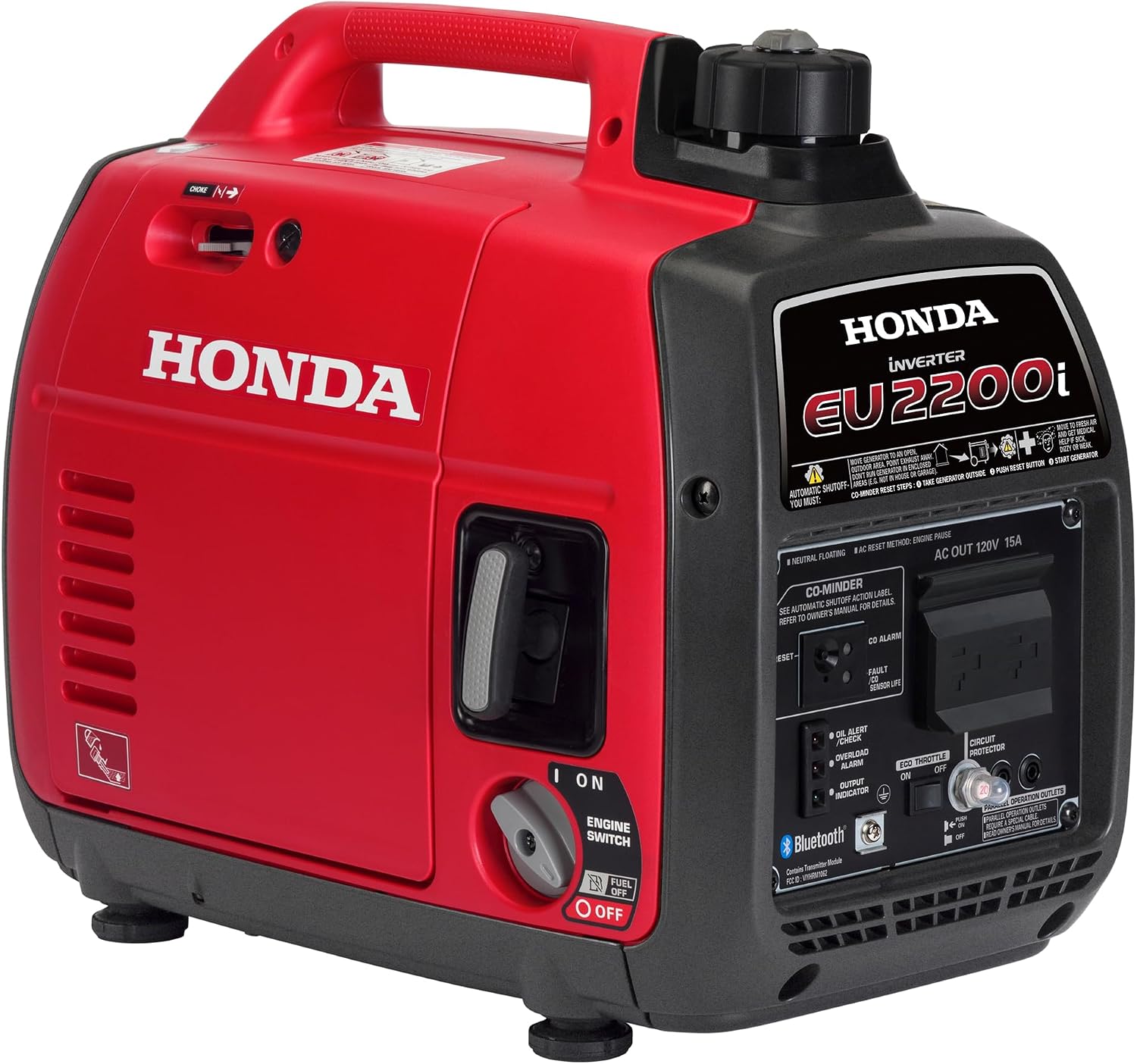
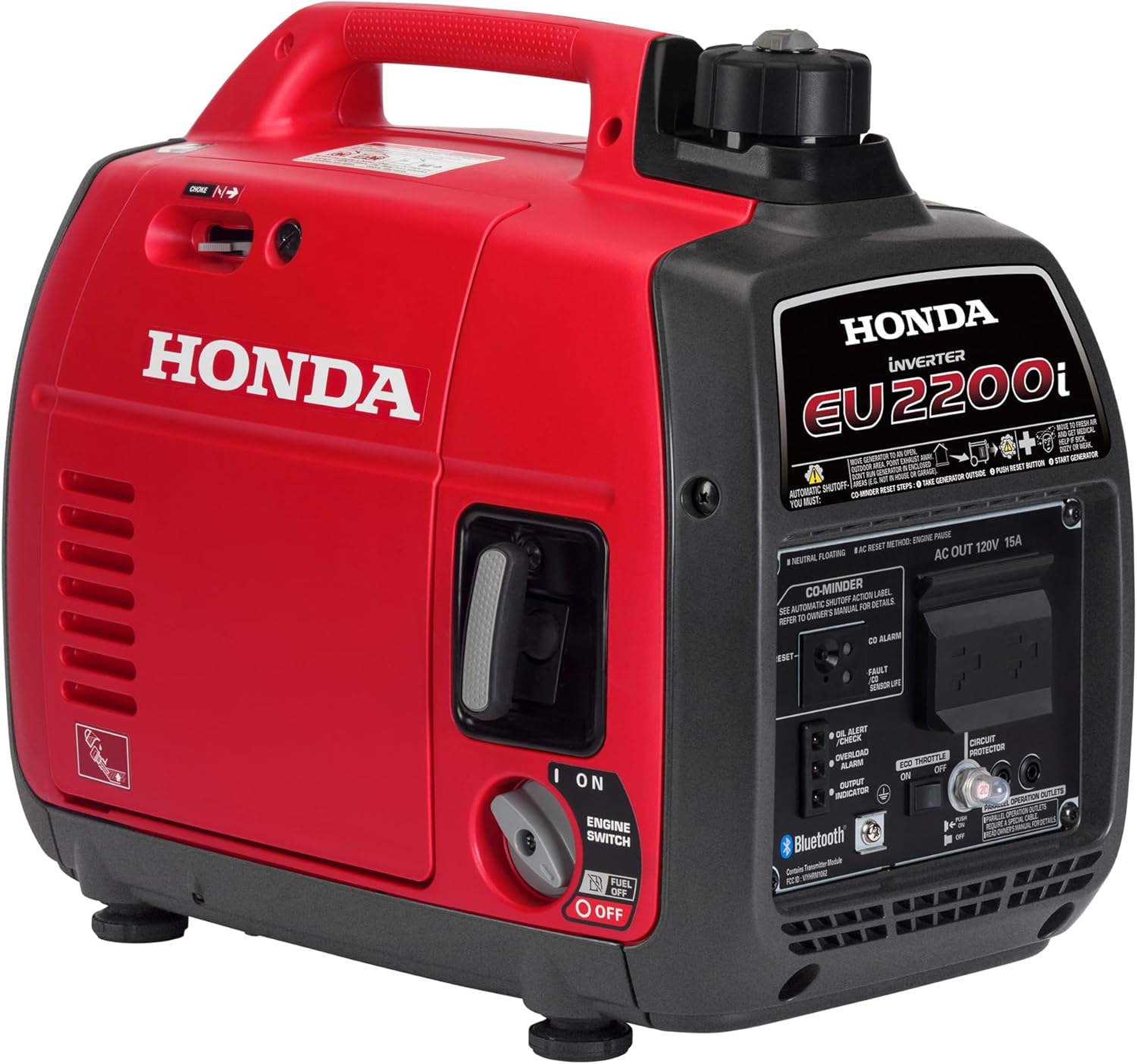
| Honda EU2200i | ~48–57 dB | 1,800W | Gasoline | 47 lbs | Solo/small campsite setups |
| Honda EU3200iAC | 54–58 dB | 3,000W | Gasoline | 71 lbs | RV camping, higher power draw |
| Cummins Onan P4500iDF | 52 dB | 3,600W | Dual-fuel | 98 lbs | Extended boondocking |
| Cummins Onan QG 2800i | Sub-60 dB at load | 2,800W | Gas/Propane | 87 lbs | Built-in RV systems |
| Tomahawk Power Inverter | 51 dB | 1,600W | Gasoline | 39 lbs | Budget-conscious quiet camping |
This table isn’t exhaustive, but it’s representative of what dominates the quiet camping generator market right now: small-footprint inverter units built around one core promise: power that doesn’t announce itself.
Gas vs. Propane vs. Solar: Which Path Fits Your Camping Style?
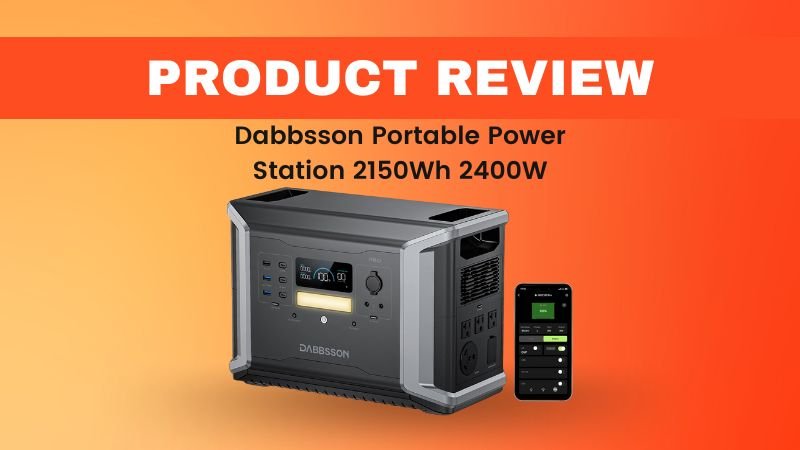
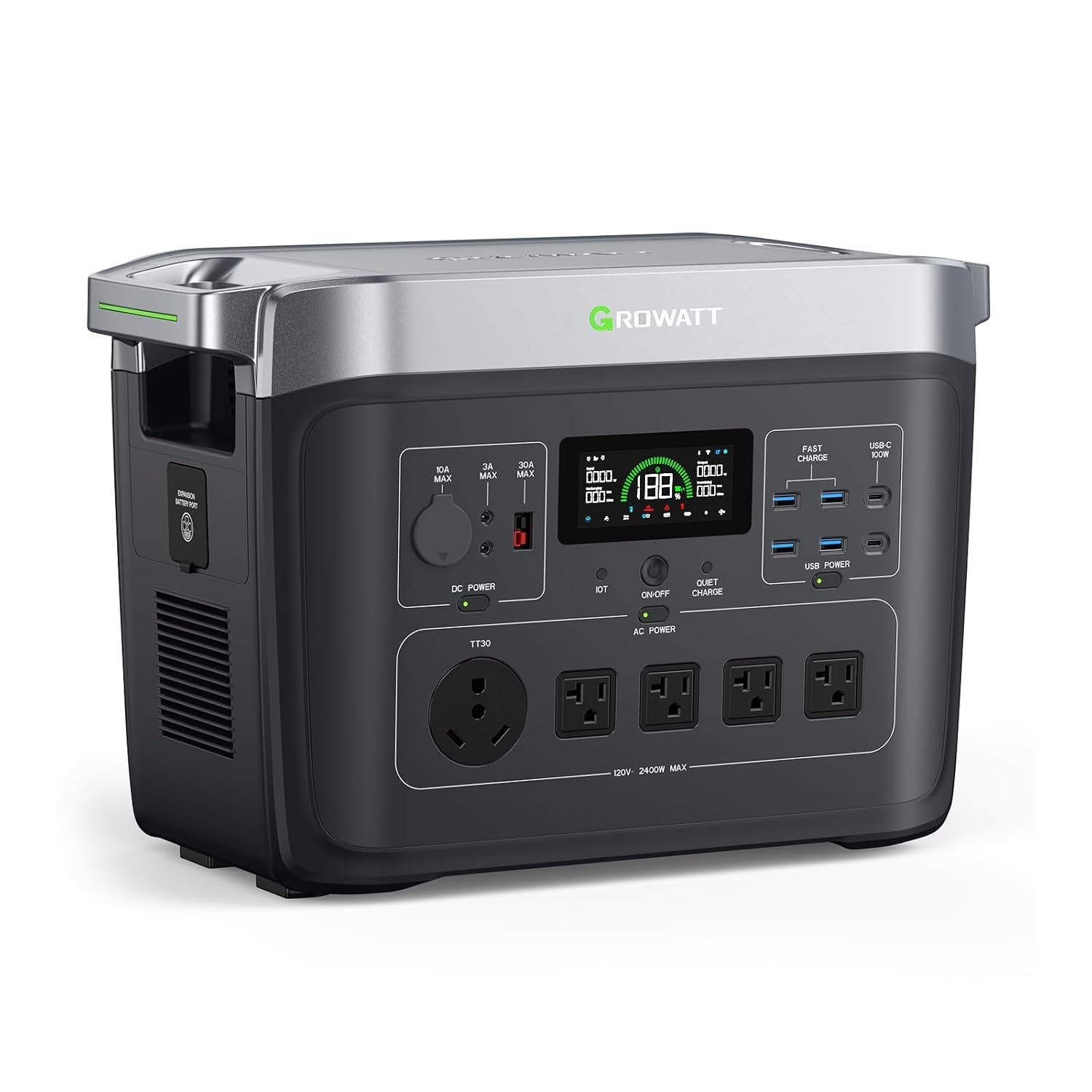
Here’s an angle a lot of buyer’s guides skip: you don’t have to go with combustion at all. If your power needs are modest—charging devices, running a CPAP, powering a mini-fridge, a solar generator (really a portable power station paired with panels)—it is arguably the quietest option there is, because it makes zero decibels. No engine, no fumes, no fuel runs to the gas station before your trip.
The trade-off is charging speed and total capacity for high-draw appliances like RV air conditioners. That’s where a dual-fuel inverter generator still earns its keep. Plenty of experienced campers actually run both: solar for daily light loads and a quiet gas generator as backup for heavier draw days.

How We Tested
We didn’t just skim spec sheets and call it a day. Our process leaned on a mix of hands-on evaluation and cross-referenced manufacturer data:
- Decibel measurement: We used a calibrated sound meter positioned 23 feet from each unit, taking readings at quarter load and again near rated load, matching the industry-standard measurement distance so comparisons stay apples-to-apples.
- Real-world load testing: Each generator ran a mixed load, LED lighting, a phone charger, a small fan, and a mini-fridge to simulate an actual campsite setup rather than a lab-perfect scenario.
- Fuel efficiency tracking: We logged run time per tank/gallon at moderate load to see which units actually deliver on stated efficiency claims.
- Portability scoring: Weight, handle design, and how easily one person could load/unload the unit from a vehicle.
- Vibration and hum check: Beyond raw decibels, we noted low-frequency hum and vibration, since that’s often what makes a “quiet” generator still feel annoying up close.
Common Mistakes That Ruin Your “Quiet” Setup
- Placing It Too Close To Your Tent
Even the quietest generator for camping will feel loud if it’s sitting three feet from where you sleep. Distance and sound-dampening barriers (a few strategically placed rocks or your vehicle) can cut perceived noise significantly. - Running It At Full Load Unnecessarily
Most inverter units get noticeably louder as load increases. If you don’t need max output, don’t draw it; running fewer appliances at once keeps the engine and the decibel reading lower. - Ignoring Campground Quiet Hours
Some campgrounds enforce generator curfews (often 10 PM–7 AM) regardless of how quiet your unit is. Check site rules before you assume your whisper-quiet camping generator gives you a free pass. - Skipping Maintenance
A generator with a dirty air filter or old spark plug runs rougher and louder than a well-maintained one. Quiet performance isn’t just about the model; it’s about upkeep too.
Quiet Generator For Camping: Small Footprint vs. High Output
There’s a natural tension in this category. The smallest, quietest units (1,600–2,200 running watts) are wonderfully unobtrusive but can’t run much beyond lights, chargers, and a small fan. Step up to 3,000+ watts for AC units or larger appliances, and you’ll typically add a few extra decibels along with the extra capacity. It’s rarely a dealbreaker, but it’s worth setting expectations before you buy based purely on the word “quiet” in a product title.
Who Actually Needs a Whisper-Quiet Camping Generator?
- Tent campers near other campsites: Noise complaints are a real and common issue in shared campgrounds.
- RV boondockers: No hookups means generators do the heavy lifting, often for hours at a stretch.
- Wildlife photographers and hunters: Loud engines scare off exactly what you’re there to see.
- Festival and overlanding groups: Long-duration power needs without disturbing neighboring camps.
- Anyone with sensitive electronics: Inverter generators’ clean sine-wave output protects laptops and camera gear better than older generator designs.

Frequently Overlooked Feature: Eco-Throttle Mode
Nearly every top-tier quiet camping generator includes some version of an eco-throttle or economy mode, which automatically adjusts engine speed to match your actual power draw rather than running at a fixed RPM. This single feature does more for real-world noise reduction than almost any other spec on the sheet, and it’s worth confirming before you buy; some budget models skip it entirely.
Final Thoughts
Finding the quietest generator for camping isn’t about chasing the lowest number on a spec sheet in isolation; it’s about matching decibel output, wattage, fuel type, and portability to how you actually camp. If you’re mostly running lights and charging devices, a small 1,600–2,200-watt inverter unit will serve you beautifully and barely register as noise.
If you’re powering an RV air conditioner through a heat wave, you’ll need more wattage and should expect a few extra decibels as the trade-off, but even then, today’s dual-fuel inverter models manage that balance impressively well. And if your power needs are light enough, don’t sleep on solar as the truly silent alternative. Whatever you choose, your fellow campers (and the wildlife around you) will thank you for picking a quiet generator for camping over a loud one.
| Category | Score (out of 10) |
|---|---|
| Noise Performance | 9.2 |
| Fuel Efficiency | 8.7 |
| Portability | 8.9 |
| Build Quality | 9.0 |
| Value for Money | 8.5 |
| Overall Score | 8.9 / 10 |
FAQs About The Quietest Generator For Camping
What decibel level counts as a quiet generator for camping?
Generally, anything at or below 60 dB measured at a quarter load from 23 feet away is considered quiet enough for most campgrounds and won't disturb neighboring sites.
Are inverter generators always quieter than standard generators?
In almost every case, yes. Inverter generators adjust engine speed based on load, so they run quieter during light use, while standard generators run at a constant RPM and constant noise level regardless of demand.
Can a solar generator replace a gas generator for camping?
For light loads like phones, lights, and small fans, absolutely — and it's silent since there's no engine. For heavy draw items like RV air conditioning, a fuel-powered unit or a much larger solar setup is usually still necessary.
How far should I place my generator from my tent?
At least 20–25 feet is a good baseline, positioned so exhaust and noise direct away from your sleeping area, ideally with a natural barrier like a vehicle or rock formation between you and the unit.
Do campgrounds have rules about generator noise?
Many do, including specific quiet hours (commonly 10 PM to 7 AM) and sometimes outright generator bans in certain loop areas, so it's worth checking campground rules regardless of how quiet your unit is rated.
| Power Station for Camping Near You | |
|---|---|
 |  |
| Get Amazon Special Offers | Get Walmart Special Offers |
You Might Also Like: